
Our Latest Thinking, Insights and Updates
AI Logistics in ASEAN: Real-Time Insights
AI Logistics Solutions: Transforming Logistics Operations in ASEAN with Real-Time Visibility and AI-Driven Insights
In an increasingly volatile supply chain environment, artificial intelligence (AI) has become a game-changer for logistics operations. Across ASEAN, companies are investing heavily in AI logistics solutions to improve efficiency, resilience, and decision-making speed. The AI market in ASEAN is projected to reach nearly US$9 billion by 2025. AI-related project budgets are expected to increase by around 67% from 2024 to 2025.
Globally, the logistics sector is adopting AI at an unprecedented pace. According to McKinsey, 72% of supply chain organizations have deployed AI in at least one function, such as demand forecasting or document processing. This rapid adoption signals a new reality. Leveraging AI is no longer optional for logistics and supply chain leaders who want to remain competitive.
One key driver of AI’s impact is operational intelligence. This capability turns large volumes of real-time logistics data into actionable insights. For example, Symphony AI InsightWorks is a new AI-powered module within the Symphony Logistics Suite. It focuses on three core pillars of AI-driven operational intelligence: real-time visibility, conversational analytics, and AI-assisted decision support.
By strengthening these areas, AI solutions help logistics teams respond faster and make better decisions across warehouse and transportation operations. In the sections below, we explore how each capability pillar reshapes logistics workflows. These include practical use cases such as exception management, dynamic reporting, and shipment tracking. Together, these capabilities are essential for forward-looking supply chain organizations.
Real-Time Visibility: From Warehouse Floor to Supply Chain Milestones
Effective real-time warehouse visibility and in-transit tracking form the foundation of AI-driven logistics. Real-time visibility means knowing what is happening across operations as it happens. This includes inventory levels, order fulfillment status, and fleet locations. This immediacy allows managers to identify issues and address them proactively.
However, a lack of visibility remains a widespread challenge. An estimated 85% of companies still have limited or no clear visibility across their supply chain networks. This blind spot is costly. When supply chains fail due to unforeseen delays or stockouts, service levels and earnings can suffer. Experts now view real-time visibility as a strategic imperative for survival and resilience, not just an operational feature.
AI-powered visibility tools give logistics providers a competitive edge by turning data into immediate awareness and action. IoT sensors and connected systems, such as WMS and TMS, stream live data on warehouse activity and shipments. AI platforms can provide continuous shipment status tracking. They update each milestone from port departure to last-mile delivery and flag any deviations.
When delays or exceptions occur, the system triggers automatic alerts or escalations. Advanced ocean freight visibility systems can detect issues and notify stakeholders instantly. These systems use predictive intelligence to recognize patterns and suggest adjustments that help avoid further delays. In warehouses, real-time visibility can reveal when a critical order is stuck in picking. With AI support, managers can be notified immediately and reroute labor or equipment to remove the bottleneck.
AI does more than show what is happening. It also helps predict what will happen next. Many organizations now combine predictive analytics with real-time data to prevent disruptions. For example, AI-driven visibility can analyze throughput rates and forecast whether daily targets will be missed. Teams can then add resources before backlogs grow.
Even leading supply chains see the value of advanced visibility tools. Many plan to invest in real-time tracking and digital twins within the next three to five years. The message is clear. Real-time visibility enabled by AI is no longer a luxury. It is becoming the standard for agile and resilient logistics. Companies that use it can respond to issues in minutes rather than days. This turns potential failures into manageable exceptions with minimal impact.
Conversational Analytics: Turning Data into Dialogue and Insights
Another AI capability transforming logistics is conversational analytics. This approach uses natural language interfaces, such as chatbots or voice assistants, to query and analyze operational data in real time. Instead of relying on static dashboards or analysts, decision-makers can ask questions in plain language and receive instant, AI-generated answers. This model democratizes data access and places analytics directly in the hands of warehouse managers and supply chain leaders.
Modern supply chains generate large volumes of data every day. Conversational analytics helps cut through this complexity and deliver on-demand insights for faster decisions.
Imagine a logistics manager in a morning meeting asking, “Which orders scheduled for dispatch today are at risk of delay?” With an AI-driven analytics assistant, the answer appears in seconds using live WMS and order data. No SQL queries or IT reports are required. For this reason, many supply chain solution providers now offer Natural Language Query (NLQ) features. Industry experts note that turning complex database searches into simple conversations is changing how professionals access and analyze data.
As the connected logistics market grows toward an estimated US$125 billion by 2032, the ability to surface insights instantly has become a competitive necessity. Speed matters. If a competitor can ask, “What is our current outbound capacity versus forecast?” and act immediately, while others wait days for reports, the gap quickly widens.
Conversational analytics is also valuable for exception management and root-cause analysis. Instead of reviewing logs after an issue occurs, a supervisor can ask, “Why was yesterday’s delivery from Warehouse A delayed?” The AI can analyze shipment records and return a clear explanation, such as a truck breakdown that caused a two-hour delay.
More advanced systems allow follow-up questions and deeper analysis. Using knowledge graphs and AI, they can handle queries like, “Is this a recurring issue with that carrier?” This turns logistics data systems into interactive tools for continuous learning.
For ASEAN logistics firms, where teams operate across countries and languages, conversational AI can reduce communication and skill gaps. Staff at all levels can engage directly with data. Front-line teams gain access to key metrics, such as inventory turns and on-time delivery rates. Executives can quickly view summaries or drill down into details.
By simplifying how people interact with analytics, conversational interfaces speed up problem-solving and support confident decision-making. In practice, conversational analytics turns static reports into interactive discussions and strengthens modern operational intelligence.
AI-Assisted Decision Support: From Reactive to Proactive Logistics
AI-assisted decision support highlights the true power of AI in logistics. These tools not only analyze data but also recommend actions or automate decisions for routine scenarios. This capability moves organizations from reactive firefighting to proactive optimization. AI-driven decision support includes predictive analytics, prescriptive recommendations, and automated root-cause analysis. By combining machine learning with operations research, these systems help answer a critical question: “Given what is happening, what should we do next?”
Modern supply chain AI platforms can monitor operations and deliver recommendations in real time. For example, an AI assistant may detect that orders for a specific SKU are rising by 20% this week. It can then suggest increasing labor in the packing area for the next shift to prevent backlogs. In transportation management, AI algorithms can analyze weather, traffic, and driver data to recommend optimal reroutes and avoid congestion delays.
In warehouse operations, decision support systems can identify inefficiencies in daily workflows. They may flag that fast-moving items are stored too far from picking zones and recommend re-slotting to reduce travel time. These continuous, data-driven adjustments improve overall performance. Companies using predictive analytics report better forecasting, faster decisions, and fewer disruptions. These gains translate directly into higher efficiency and service levels.
AI-assisted decision support is designed to support human decision-makers, not replace them. The most effective systems act as a copilot. They process large volumes of operational data, highlight issues, and propose actions. Human managers still approve the most critical decisions. This balance is essential in logistics, where experience and judgment remain important.
As Gartner notes, operational AI tools enable users to make informed tactical decisions in real time. In practice, planners and managers can rely on AI to detect anomalies, such as sudden drops in throughput or spikes in delivery time. The system can suggest likely causes and recommend responses within minutes. This removes the need to wait for end-of-day reports to identify problems that may have been growing for hours.
The strategic value of AI-assisted decision support is significant. It transforms logistics from a cost center into a source of competitive advantage. Organizations that embed AI into decision processes achieve faster response times, lower operating costs, and better service metrics. Predictive insights also shift teams from firefighting to prevention.
Instead of reacting to late shipments, logistics teams can identify at-risk orders and intervene early. This turns potential failures into opportunities to improve service. Many industry experts agree that AI-driven operational intelligence is no longer optional for growing enterprises. It provides the real-time insights and agility needed to perform under pressure. In short, AI-assisted decision support enables faster and better decisions. The result is more reliable operations, higher customer satisfaction, and stronger financial performance.
Symphony AI InsightWorks: A Strategic Differentiator in the Symphony Logistics Suite
By bringing these pillars together, Symphony AI InsightWorks stands out as an AI-driven operational intelligence solution for logistics and warehouse operations. As part of the Symphony Logistics Suite, it builds on Symphony’s Warehouse Management System (WMS) and related modules. It delivers advanced insights without replacing existing systems.
Symphony AI InsightWorks acts as a seamless layer on top of Symphony WMS and OMS. It ingests operational data and produces actionable intelligence without disrupting current processes. This integration allows companies to unlock AI capabilities quickly and with lower risk. It also enables them to leverage their existing Symphony infrastructure.
In practice, real-time visibility improves across operations. InsightWorks provides live dashboards and real-time tracking of inventory and orders. It also offers milestone status visibility for in-transit shipments. Logistics teams receive exception alerts as soon as deviations occur, with automated escalations for critical issues.
The platform goes beyond flagging problems. It applies AI-based root-cause analysis to explain why an exception happened and how to prevent it in the future. These features lead to faster response times and more reliable processes.
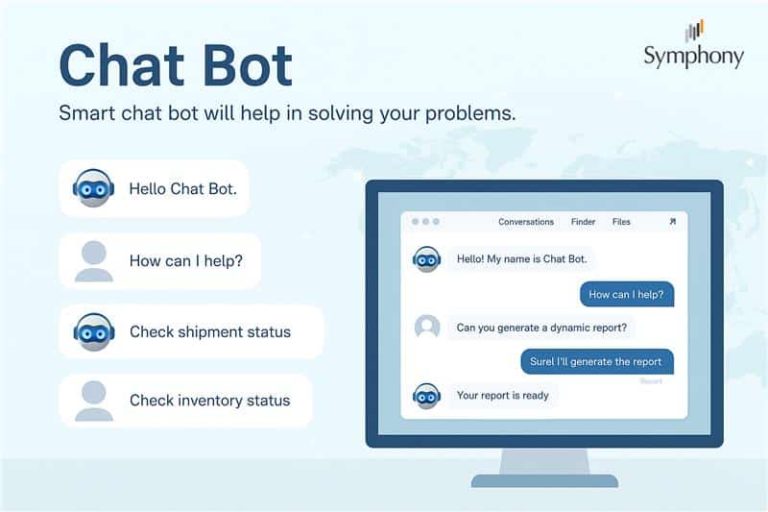
Symphony AI InsightWorks also brings conversational analytics into daily logistics work. Instead of relying on static reports, users can interact with data through a conversational interface. They can request operational reports or KPIs and receive results in seconds, complete with visuals or drill-down options.
Dynamic reporting compiles and analyzes daily warehouse activity automatically. AI highlights key trends and outliers for users. For example, a warehouse manager can ask, “Show me today’s outbound orders that missed their pickup cut-off time.” InsightWorks then returns the list and related details instantly. By enabling natural language queries, the platform helps every team member work with data more easily and confidently.
In the area of AI-assisted decision support, InsightWorks delivers intelligent recommendations and forecasts based on Symphony operational data. The system detects patterns and suggests corrective actions proactively. It functions like a virtual analyst that operates continuously.
Because the recommendations are built on logistics-specific AI models from Symphony experts, they are practical and context-aware. Over time, these small adjustments accumulate into meaningful gains in efficiency and service quality.
In summary, Symphony AI InsightWorks combines real-time visibility, conversational analytics, and AI-driven decision support for logistics operations. Embedded within the Symphony Logistics Suite, it strengthens existing processes without major disruption. Logistics and supply chain leaders in ASEAN and beyond can use it to gain end-to-end visibility, respond to exceptions in real time, and improve decisions continuously.
AI-driven logistics is no longer a future concept. Organizations that adopt tools like InsightWorks are positioning themselves ahead of competitors. Symphony AI InsightWorks is more than software. It is a strategic differentiator that turns data into operational intelligence and operational intelligence into business value.
Learn more about how Symphony AI InsightWorks, as part of the Symphony Logistics Suite, can help your organization achieve real-time logistics intelligence and drive proactive decision-making in your supply chain.
Referensi
- McKinsey & Company. (2023). The state of AI in 2023: Generative AI’s breakout year. Retrieved from https://www.mckinsey.com
- Gartner. (2024). Operational AI: Decision Intelligence for Real-Time Logistics. Retrieved from https://www.gartner.com
- Supply Chain Asia. (2023). AI Revolution in Logistics: Transform Now or Fall Behind. Retrieved from https://supplychainasia.org
- Acropolium. (2024). Why and How to Employ AI in Warehouse Management. Retrieved from https://acropolium.com
- EnVista Corp. (2023). How AI Is Redefining Logistics in Asia-Pacific. Retrieved from https://envistacorp.com
- Panorama Consulting. (2023). AI in Logistics: Trends Transforming Supply Chains. Retrieved from https://www.panorama-consulting.com
- DocShipper. (2024). How AI Is Changing Logistics and Supply Chain in 2025. Retrieved from https://docshipper.com
- Kellton. (2023). AI in Supply Chain: Transforming Global Logistics. Retrieved from https://www.kellton.com
- ResearchGate. (2024). Supply Chain and AI: Transforming Logistics and Operations in the Digital Age. Retrieved from https://www.researchgate.net